
The Quran, Islam’s central religious text, holds immense spiritual weight for Muslims globally. Increasingly, access to both the original Arabic text and English translations, often in PDF format, is becoming widespread.
With Islam being the world’s second-largest religion, the demand for accessible translations grows, facilitated by digital resources like the Quran Majeed PDF and online archives preserving internet history.
The Significance of the Quran
The Quran is profoundly significant to Muslims, considered the literal word of God (Allah) revealed to the Prophet Muhammad through the angel Gabriel. It’s not merely a religious text, but a comprehensive guide to life – encompassing moral, ethical, legal, and spiritual principles. For Muslims, understanding the Quran is central to their faith and practice.
The availability of the Quran in both its original Arabic and in English translation, often accessible as a PDF, dramatically expands its reach. This allows individuals who do not read Arabic to engage directly with the divine message. The increasing accessibility, alongside resources like the Wayback Machine preserving digital content, highlights the growing global interest in Islamic scripture.
Furthermore, the Quran serves as the foundation of Islamic law (Sharia) and influences various aspects of Muslim culture and civilization. Its verses are recited in daily prayers, memorized by heart, and studied extensively by scholars. The preservation of its text, both in Arabic and through reliable English translations in PDF format, is therefore of paramount importance to the Muslim community worldwide.
Why Accessing Both Arabic and English Translations is Beneficial
Accessing both the original Arabic text and English translations of the Quran offers a multifaceted understanding of the scripture. While the Arabic holds unique linguistic and spiritual qualities, English translations, often found as convenient PDFs, provide accessibility for a wider audience. This dual approach allows for a more nuanced interpretation.
Studying the Arabic alongside a translation aids in appreciating the subtleties of the original language, which can be lost in translation. Conversely, the English translation offers immediate comprehension for those unfamiliar with Arabic, fostering a deeper connection with the text. The increasing availability of digital resources, like the Quran Majeed PDF, facilitates this comparative study.
Moreover, with the internet preserving vast amounts of information – as evidenced by the Wayback Machine’s 1 trillion web pages – access to diverse translations and commentaries is easier than ever. This empowers individuals to explore different perspectives and arrive at a more informed understanding of the Quran’s message.

Understanding the Arabic Quran
The Arabic Quran represents the divine word in its original form, preserved meticulously over centuries. Accessing it, alongside English translations in PDF format, unlocks deeper insights.
The Originality and Preservation of the Arabic Text
The Quran’s originality is a cornerstone of Islamic belief. Muslims believe the text revealed to Prophet Muhammad (peace be upon him) is identical to the Arabic text available today. This preservation isn’t merely through written records, but also through a robust oral tradition, with generations memorizing the entire text – known as huffaz.
Early Muslims meticulously documented the revelations during the Prophet’s lifetime, and shortly after his passing, these were compiled into a single volume under the Caliph Abu Bakr. This initial compilation was later standardized during the Caliph Uthman’s reign, ensuring uniformity across the expanding Islamic empire. The resulting text, known as the Uthmanic codex, serves as the foundation for all subsequent copies.
The availability of the Quran in PDF format, both in Arabic and English translation, facilitates wider access to this historically preserved text. Digital preservation efforts, like those of the Wayback Machine archiving web pages, complement the traditional methods of safeguarding the Quran’s integrity, ensuring its accessibility for future generations.
The Importance of Tajweed (Pronunciation)

Tajweed, meaning “improvement” or “adornment,” refers to the rules governing the correct pronunciation of the Quran in Arabic. It’s not simply about reciting the words accurately, but also about conveying the intended meaning and beauty of the divine text. Proper Tajweed ensures that each letter is articulated from its correct origin, with its appropriate characteristics, and with due consideration for pauses and intonation.
Mastering Tajweed requires dedicated study and practice, often under the guidance of a qualified teacher. While English translations offer understanding of the meaning, they cannot replicate the sonic beauty and spiritual impact of the original Arabic recitation.
Fortunately, resources like Quran PDF files, coupled with online learning platforms, now offer audio recitations by skilled qaris (reciters), aiding learners in perfecting their Tajweed. These digital tools complement traditional learning methods, making the art of beautiful recitation more accessible globally, preserving the authentic sound of the Quran.
Key Features of the Arabic Script in the Quran
The Arabic script used in the Quran possesses unique characteristics crucial for accurate reading and understanding. Unlike the Roman alphabet, it’s written from right to left and features connected letters, altering their form depending on their position within a word – initial, medial, final, or isolated.
Vowel markings, though often omitted in Quran print (including PDF versions), are essential for correct pronunciation, especially for beginners. These diacritical marks indicate short vowels and other phonetic nuances. The script also utilizes consonant doubling and specific letter combinations that influence pronunciation.
Understanding these features is vital, even when relying on English translations. Digital Quran resources, including interactive PDFs, often highlight these script elements, aiding learners. Recognizing the script’s nuances enhances appreciation for the Quran’s original form and facilitates a deeper connection with its message, beyond mere translation.

Exploring English Translations of the Quran
English translations of the Quran, often available as PDFs, offer accessibility for non-Arabic speakers. Numerous versions exist, each with unique interpretations and stylistic choices.

Popular and Highly-Regarded English Translations
Several English translations of the Quran are widely respected for their accuracy and readability. Muhammad Asad’s translation is known for its literary style and extensive footnotes, offering valuable context. Yusuf Ali’s translation, frequently available as a Quran PDF, remains a classic, appreciated for its comprehensive notes and adherence to traditional Islamic scholarship.
Pickthall’s translation is valued for its attempt to remain close to the original Arabic text, prioritizing literal accuracy. More recent translations, like those by Dr. Mustafa Khattab, aim for clarity and contemporary language, making the Quran accessible to a broader audience. These translations, often found in digital formats including PDFs, cater to diverse preferences and levels of understanding.
The availability of these resources, including easily downloadable Quran PDF versions, has significantly broadened access to the text for English-speaking Muslims and those interested in learning about Islam.
Differences in Interpretation Among Translations
English translations of the Quran, while aiming for accuracy, inevitably reflect the translator’s understanding and interpretive choices. Nuances within the original Arabic text can lead to varying renderings of specific verses, impacting the overall meaning conveyed. These differences stem from linguistic complexities and differing theological perspectives.
For example, a word with multiple connotations in Arabic might be translated differently depending on the translator’s school of thought. Accessing multiple Quran PDF translations allows readers to compare interpretations and gain a more comprehensive understanding. It’s crucial to remember that translations are interpretations, not replacements for the original text.
Scholarly commentaries (Tafsir) alongside these PDF resources, provide deeper insights into these interpretive variations, helping readers navigate the complexities and appreciate the richness of the Quran’s meaning.
The Role of Tafsir (Commentary) in Understanding the English Translation
Tafsir, or Quranic commentary, is indispensable for a thorough understanding of the Quran, especially when relying on English translations. Translations, even the most meticulous Quran PDF versions, can’t fully capture the historical, cultural, and linguistic context of the original Arabic text.
Tafsir provides this crucial context, explaining the circumstances of revelation, clarifying ambiguous verses, and exploring the diverse interpretations offered by prominent Islamic scholars throughout history. It bridges the gap between the ancient text and the modern reader, illuminating the deeper meanings embedded within.

Utilizing Tafsir alongside English translations and PDF resources allows for a more nuanced and informed reading, preventing misinterpretations and fostering a richer appreciation for the Quran’s wisdom and guidance. It’s a vital tool for serious students of the scripture.
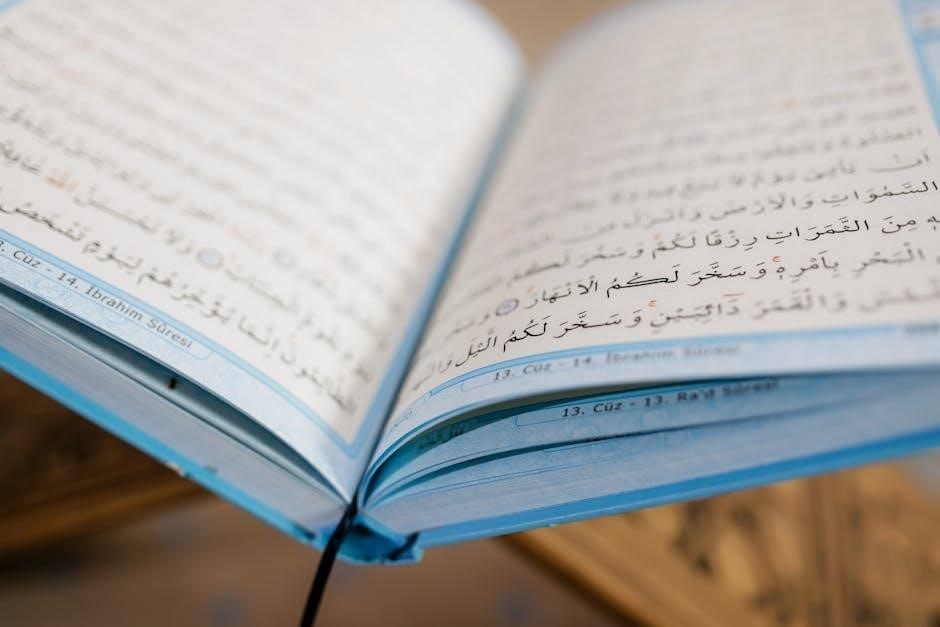
Quran PDF Resources: Arabic and English
Quran PDF resources offer convenient access to both Arabic text and English translations. These digital copies facilitate study and preservation of the holy book.
Where to Find Reliable Quran PDF Downloads
Finding trustworthy sources for Quran PDF downloads is crucial, ensuring authenticity and accurate representation of the text. Several reputable websites specialize in providing both the original Arabic Quran and various English translations in PDF format.
Quran.com is a popular choice, offering a clean interface and downloadable PDFs with multiple translations. Similarly, IslamicFinder.org provides access to the Quran in numerous languages, including downloadable PDF versions. BaynaYadayn.com is another resource, known for its beautifully formatted PDFs and accompanying Tajweed rules.
Furthermore, digital libraries like the Internet Archive’s Wayback Machine, while preserving a vast history of the web, may contain older Quran PDF versions; However, verifying the source’s reliability is essential when using archived materials. Always prioritize websites directly affiliated with Islamic institutions or recognized Quranic scholars to guarantee accuracy and avoid misinterpretations. Beware of unofficial sources that might contain errors or alterations to the sacred text.

Features to Look for in a Quran PDF (Search, Bookmarks, etc.)
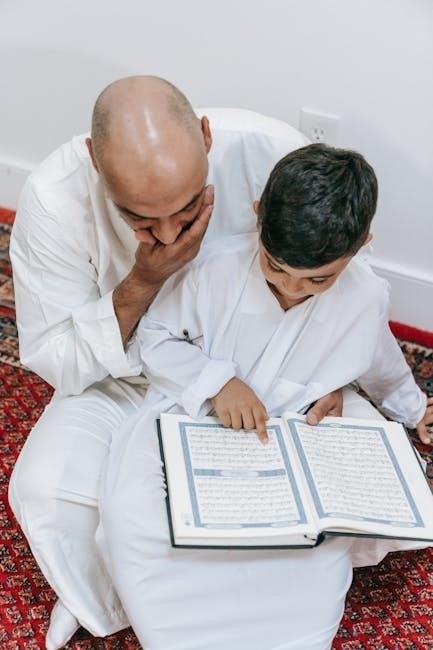
When selecting a Quran PDF, whether in Arabic or English translation, certain features significantly enhance the reading and study experience. A crucial element is a functional search capability, allowing quick location of specific verses or keywords within the text.
Interactive bookmarks are invaluable for navigating the Quran efficiently, enabling easy access to specific chapters (Surahs) or sections (Juz’). High-quality PDFs often include clear page numbering and a well-organized table of contents. Look for versions offering adjustable font sizes and styles for comfortable reading.
Some advanced PDFs incorporate audio recitation links, allowing simultaneous listening while following the text. The presence of footnotes and endnotes, particularly in English translations, provides valuable context and explanations. Finally, a user-friendly interface and a visually appealing layout contribute to a more engaging and fruitful study of the Quran. Prioritize PDFs designed for scholarly use and ease of navigation.
Legal Considerations Regarding Quran Distribution
Distributing the Quran, including Arabic texts and English translations in PDF format, involves navigating specific legal and ethical considerations. While the Quran itself is considered public domain, certain translations may be protected by copyright laws.
Therefore, freely distributing copyrighted English translations without permission from the publisher is generally prohibited. Many organizations offer licenses for distributing the Quran, ensuring compliance with copyright regulations. It’s crucial to verify the licensing terms before sharing any Quran PDF widely.
Respecting intellectual property rights is paramount; Furthermore, the presentation of the Quran should adhere to Islamic principles of reverence and accuracy. Altering the text or presenting it in a disrespectful manner is strongly discouraged. Always prioritize obtaining PDFs from reputable sources to ensure authenticity and legal compliance, safeguarding both the text and the rights of translators and publishers.

Advanced Study Resources
Online platforms offer in-depth Quran study, including Arabic and English translation PDF analysis. Comparative tools aid scholars in examining various interpretations and textual nuances.
Online Quran Learning Platforms
Numerous online platforms are dedicated to facilitating Quran study, catering to diverse learning needs and levels of expertise. These resources often provide access to the Quran in both its original Arabic script and various English translations, frequently available as downloadable PDF files.
Many platforms feature interactive lessons focusing on Tajweed (proper pronunciation), enabling learners to recite the Quran accurately. Some offer specialized courses comparing different English translations, highlighting nuances in interpretation and providing context through Tafsir (commentary).
These digital environments frequently incorporate audio recitations by renowned Qaris (reciters), allowing students to internalize the melodic beauty of the Arabic text. Furthermore, advanced learners can utilize tools for comparative translation analysis, examining multiple PDF versions side-by-side to deepen their understanding. The accessibility of these platforms democratizes Quranic education, making it available to a global audience, regardless of geographical location or prior knowledge.
Tools for Comparative Translation Analysis
Delving into the Quran’s meaning often necessitates comparing multiple English translations. Fortunately, several digital tools aid this process, particularly when working with Quran PDF resources. Specialized software and websites allow users to load different PDF versions simultaneously, enabling side-by-side textual analysis.
These tools frequently highlight variations in wording and interpretation, prompting deeper reflection on the nuances of each translation. Some platforms incorporate Tafsir (commentary) alongside the translations, providing contextual insights. Others offer features like verse-by-verse comparison and keyword searching across multiple PDF documents.
Furthermore, online forums and communities dedicated to Quranic studies facilitate collaborative analysis, where users share insights and discuss differing interpretations. Utilizing these resources empowers students to move beyond a single translation, fostering a more comprehensive and informed understanding of the Quran’s message, enriching their engagement with both the Arabic original and its English renderings.